
Written by Co|So’s Offsite Research Team: Yael Brown, Samantha DeSanctis, Ahina Sinha, Sage Futrell, and Kayla Gray.
Edited by: Olivia Hoagland
If you are a long time member of the Boston art scene or are just starting your journey, you might hear that the Copley Society of Art (Co|So), founded in 1879, is the oldest nonprofit arts association in the United States. Today, Co|So continues to serve the Boston arts community while preserving a legacy that spans nearly a century and a half.
With the 150th anniversary on the horizon, Co|So has embarked on a comprehensive research project to reexamine its past and its place in art history. By uncovering the stories and milestones that have shaped the gallery, the project will illuminate its legacy, celebrate its identity today, and share its future.
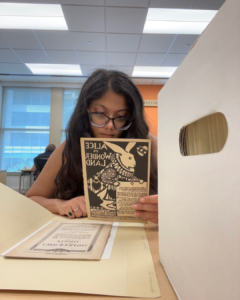
Research & Archiving Lead Ahina Sinha examining event materials from Co|So’s early years.
The Society’s records are housed at the Smithsonian’s Archives of American Art in Washington, DC. Initially loaned to the Archives in 1984, the records were officially donated in 1986. With Co|So based in Boston, the project brings together a geographically diverse team of researchers, including Anniversary Research Leads Yael Brown and Samantha DeSanctis in New York, Research and Archiving Lead Ahina Sinha, and Researcher and Archivist Sage Futrell in Washington, DC.
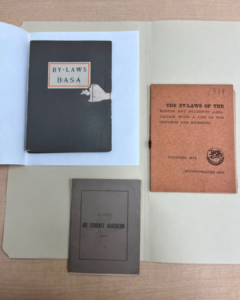
Early bylaw materials
The project involves reviewing over 117 years of holdings from the Society’s historical holdings. Through the examination, organization, and synthesis of these records, the team is piecing together the people, exhibitions, initiatives, and milestones that have shaped Co|So. Research findings are compiled into reports and shared with the broader team in Boston and the Board, helping bring the organization’s history into focus as it looks towards its 150th anniversary.
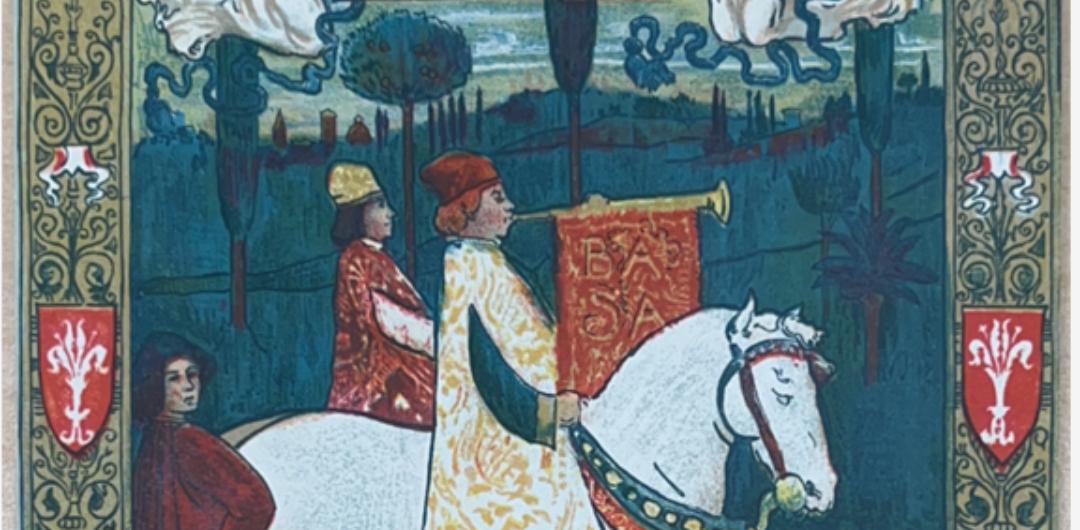
The onsite team has discovered early materials for event planning and activations, such as the below illustrations used for the Museum of Fine Art’s Artists Festival in 1893, as well as the Alice in Wonderland Art event of 1897, respectively. The beautifully intricate details of both event documents emphasize the artist members’ creative involvement in the promotion of the society’s affairs, as well as a strong sense of pride in the way they were organizing. Today, Co|So continues to grow under the passion of artists by providing in-person and online opportunities for community engagement, professional development, and gallery activations.
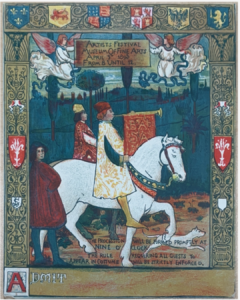
Admission ticket used for the Artists Festival in 1893, hosted by the Museum of Fine Arts, Boston.
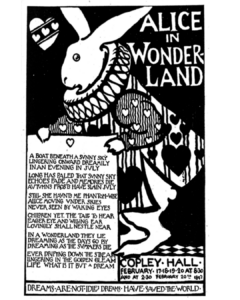
Alice in Wonderland Art event of 1897.
In addition to such past events, Co|So also held balls, holiday celebrations, drawing and painting classes, and eventually hosted the Boston leg of the iconic 1913 Armory Show. The research team’s future findings will examine these intimate events that laid the group’s groundwork, as well as understand how Co|So worked alongside other Boston arts institutions during its early history.
As the researchers sift through Co|So’s archives at the Smithsonian, they are uncovering the names of team members and contributors who shaped the nonprofit’s early development, the places throughout Boston that served as hubs for its activities, and, perhaps most importantly, the artists and events that established Co|So as an enduring force in Boston’s art scene. Through the careful digital cataloging of these rare documents and images, the research team is helping preserve and expand access to this rich history. Ensuring that Co|So’s legacy is both widely accessible and a source of prideful reflection as the gallery, and community, look ahead to celebrating its 150th anniversary in 2029.